The Life of Dr. A.P.J. Abdul Kalam: Biography in Simple English
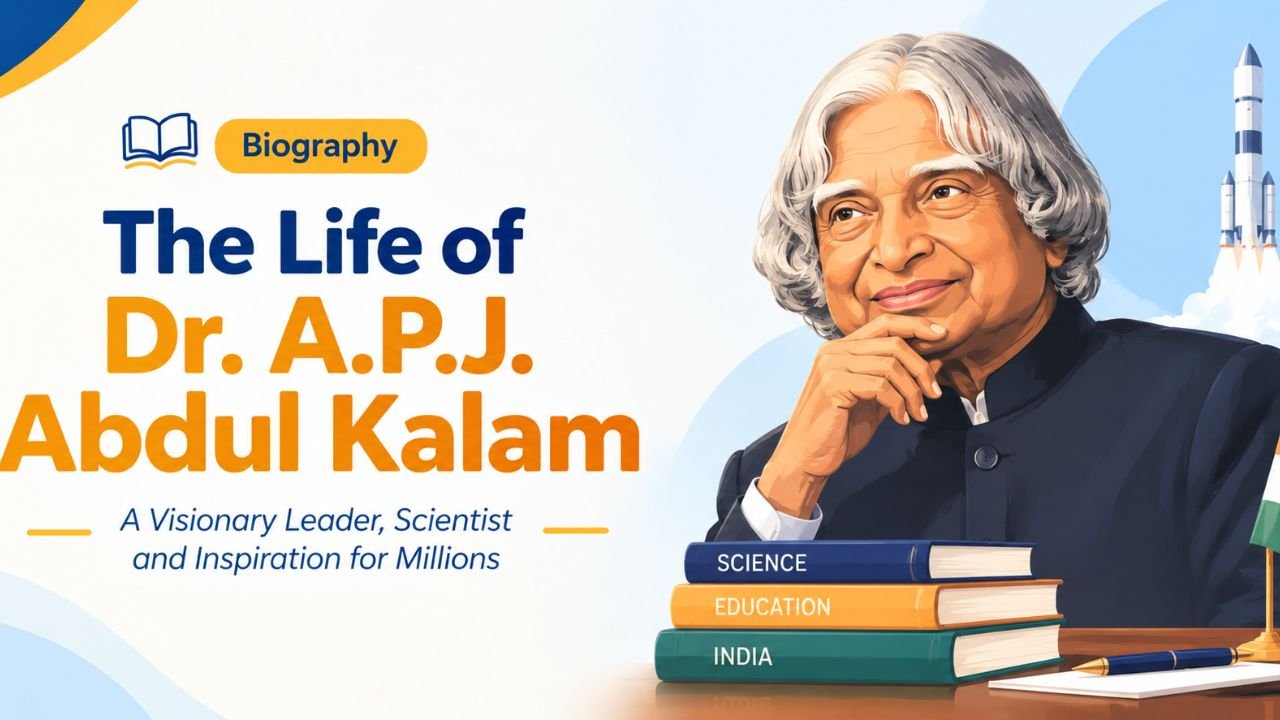
Table of contents
- English Passage: The Life of Dr. A.P.J. Abdul Kalam
- A Boy from Rameswaram
- Education and Dreams
- A Great Scientist
- Honours and Awards
- The People's President
- A Writer and a Teacher
- His Last Day and His Legacy
- Lessons from His Life
- Short Hindi Explanation (हिंदी में सरल व्याख्या)
- मुख्य विचार
- मुख्य घटनाएँ
- इस पाठ से हमें क्या समझना चाहिए
- निष्कर्ष
- Vocabulary Table
- Difficult Words and Pronunciation
- Important Phrases and Expressions
- Synonyms and Antonyms
- Useful English Sentences
- Reading Comprehension Questions and Answers
- Multiple-Choice Questions (MCQs)
- Short-Answer Questions
- True or False
- Grammar Learning
- Fill in the Blanks
- Vocabulary Practice
- Speaking and Writing Practice
- Speaking Questions
- Writing Practice
- Five Words to Use in Your Own Sentences
- Quick Revision
- Main Idea
- 10 Most Important Words
- 5 Useful Phrases
- 5 Key Learning Points
- Conclusion
- Conclusion
- Frequently Asked Questions
- 1. Who was Dr. A.P.J. Abdul Kalam?
- 2. Why is he called the "Missile Man of India"?
- 3. Which famous books did Dr. Kalam write?
- 4. Which highest honours did he receive?
- 5. How can reading biographies help me improve my English?
English Passage: The Life of Dr. A.P.J. Abdul Kalam
Note: This passage is written in simple English for learners and is based on well-known facts about Dr. Kalam's life. The words in bold are important vocabulary words explained in the tables below.
A Boy from Rameswaram
Avul Pakir Jainulabdeen Abdul Kalam was born on 15 October 1931 in Rameswaram, a small town in Tamil Nadu. His family was not rich, but it was full of love and good values. His father, Jainulabdeen, was a simple man who owned small boats, and his mother, Ashiamma, took good care of the family. Kalam was the youngest child in the house.
Even as a child, Kalam was curious. He loved to ask questions and wanted to know how things work. He often watched birds flying over the sea and wondered how they could fly so high. His family needed money, so he worked hard to help them. Every morning, he delivered newspapers before he went to school. This early habit of hard work became a part of his character.
Education and Dreams
Kalam studied at Schwartz Higher Secondary School in Ramanathapuram. He then went to St. Joseph's College in Tiruchirappalli, where he graduated in Physics in 1954. His love for flying took him to the Madras Institute of Technology, where he studied aeronautical engineering. He was a sincere and determined student who never stopped learning.
A Great Scientist
In 1958, Kalam joined the Defence Research and Development Organisation (DRDO) as a scientist. In 1969, he moved to the Indian Space Research Organisation (ISRO). There he became the project director of the SLV-III, the first satellite launch vehicle that India designed and built on its own. Although the first launch failed, the team did not give up. The failure taught them how to improve their work. In July 1980, the SLV-III finally succeeded in placing the Rohini satellite in a near-Earth orbit. This success made India a member of the small group of countries that could launch satellites by themselves.
Later, Kalam returned to DRDO and led India's missile development programme. Under this programme, India built several important missiles, such as Agni and Prithvi. Because of this work, people started calling him the "Missile Man of India". It was a famous nickname that stayed with him for the rest of his life. He also played an important role in India's nuclear programme, including the Pokhran tests of 1998. Throughout his career, Kalam wanted to serve the nation through science and technology.
Kalam also had a clear vision for his country. He wished to see India become a developed nation by the year 2020, and he explained this idea in his book India 2020.
Honours and Awards
Kalam received many honours for his service to the country. He was awarded the Padma Bhushan in 1981 and the Padma Vibhushan in 1990. He was awarded the Bharat Ratna in 1997. It is India's highest civilian honour. Around 40 universities and institutions also gave him honorary doctorates.
The People's President
On 25 July 2002, Kalam became the 11th President of India. He was elected with the support of both the ruling party and the opposition, and he remained in office until 2007. Ordinary people, especially children and students, felt very close to him, so he was called the "People's President".
Kalam believed that young people could change the nation, so he loved meeting students and talking to them. He wanted to inspire them to dream big and work hard. He had also worked as a professor at Anna University in Chennai, and after his term as President he continued to teach and meet students across the country.
A Writer and a Teacher
Kalam was also a writer. His autobiography, Wings of Fire, was published in 1999. His other books, such as India 2020, Ignited Minds and My Journey, are read by many people in India and abroad. He devoted his life to science, teaching and national development.
His Last Day and His Legacy
On 27 July 2015, Kalam was giving a lecture to students at the Indian Institute of Management in Shillong, Meghalaya, when he suffered a cardiac arrest. He passed away later that day at the age of 83. The whole nation mourned his death.
Even today, his simple life, his courage and his love for students remain an inspiration. His legacy lives on in India's space and missile programmes and in the dreams of millions of young people. In honour of Dr. Kalam, his birthday, 15 October, is observed as World Students' Day. In 2026, this day marks his 95th birth anniversary.
Lessons from His Life
- Dream big and work hard to make your dreams come true.
- Learn from failure and try again.
- Big goals are reached step by step.
- Even after great success, he remained a humble man, and we should learn to stay humble too.
- Respect your teachers and keep learning throughout your life.
Short Hindi Explanation (हिंदी में सरल व्याख्या)
डॉ. ए.पी.जे. अब्दुल कलाम का पूरा नाम अवुल पकीर जैनुलाबदीन अब्दुल कलाम था। उनका जन्म 15 अक्टूबर 1931 को तमिलनाडु के रामेश्वरम में हुआ था। उनका परिवार अमीर नहीं था, लेकिन उसमें प्रेम और अच्छे संस्कार थे। बचपन में कलाम बहुत जिज्ञासु थे। वे परिवार की मदद के लिए हर सुबह स्कूल जाने से पहले अखबार बाँटते थे।
उन्होंने रामनाथपुरम के श्वार्ट्ज़ हायर सेकेंडरी स्कूल में पढ़ाई की और फिर तिरुचिरापल्ली के सेंट जोसेफ कॉलेज से 1954 में भौतिकी में स्नातक किया। इसके बाद उन्होंने मद्रास इंस्टीट्यूट ऑफ टेक्नोलॉजी से वायुयान इंजीनियरिंग (एयरोनॉटिकल इंजीनियरिंग) की पढ़ाई की।
1958 में वे डीआरडीओ में वैज्ञानिक बने और 1969 में इसरो चले गए। वहाँ वे एस.एल.वी.-III के प्रोजेक्ट डायरेक्टर बने, जो भारत में ही डिज़ाइन और तैयार किया गया पहला उपग्रह प्रक्षेपण यान था। पहला प्रक्षेपण असफल रहा, लेकिन टीम ने हार नहीं मानी। जुलाई 1980 में एस.एल.वी.-III ने रोहिणी उपग्रह को पृथ्वी की निकट कक्षा में सफलतापूर्वक स्थापित किया। बाद में वे फिर डीआरडीओ लौटे और भारत के मिसाइल कार्यक्रम का नेतृत्व किया, जिसमें अग्नि और पृथ्वी जैसी मिसाइलें बनीं। इसी कारण उन्हें "भारत का मिसाइल मैन" कहा गया। 1998 के पोखरण परीक्षणों सहित भारत के परमाणु कार्यक्रम में भी उनकी महत्वपूर्ण भूमिका रही।
कलाम को पद्म भूषण (1981), पद्म विभूषण (1990) और भारत रत्न (1997) से सम्मानित किया गया। 25 जुलाई 2002 को वे भारत के 11वें राष्ट्रपति बने और 2007 तक इस पद पर रहे। उन्हें सत्ता पक्ष और विपक्ष दोनों का समर्थन मिला था। बच्चों और विद्यार्थियों से उनके गहरे लगाव के कारण उन्हें "जनता का राष्ट्रपति" कहा गया।
कलाम एक लेखक भी थे। उनकी आत्मकथा "विंग्स ऑफ फायर" 1999 में प्रकाशित हुई। इसके अलावा "इंडिया 2020", "इग्नाइटेड माइंड्स" और "माई जर्नी" भी उनकी प्रसिद्ध पुस्तकें हैं। 27 जुलाई 2015 को शिलांग (मेघालय) के भारतीय प्रबंधन संस्थान (आईआईएम) में विद्यार्थियों को व्याख्यान देते समय उन्हें दिल का दौरा पड़ा और 83 वर्ष की आयु में उनका निधन हो गया। पूरे देश ने शोक मनाया।
मुख्य विचार
इस पाठ का मुख्य विचार यह है कि रामेश्वरम के एक साधारण परिवार में जन्मे कलाम ने कड़ी मेहनत, जिज्ञासा और दृढ़ निश्चय से देश के विज्ञान और रक्षा क्षेत्र को आगे बढ़ाया और राष्ट्रपति बनकर करोड़ों लोगों को प्रेरित किया।
मुख्य घटनाएँ
- 1931 में रामेश्वरम में जन्म।
- 1954 में भौतिकी में स्नातक, फिर वायुयान इंजीनियरिंग की पढ़ाई।
- 1958 में डीआरडीओ और 1969 में इसरो में कार्य।
- जुलाई 1980 में एस.एल.वी.-III से रोहिणी उपग्रह की सफल स्थापना।
- मिसाइल कार्यक्रम का नेतृत्व और "मिसाइल मैन" की उपाधि।
- 1997 में भारत रत्न; 2002 से 2007 तक राष्ट्रपति।
- 27 जुलाई 2015 को शिलांग में निधन।
इस पाठ से हमें क्या समझना चाहिए
हमें बड़े सपने देखने चाहिए और उन्हें पूरा करने के लिए लगातार मेहनत करनी चाहिए। असफलता से घबराने के बजाय उससे सीखना चाहिए, जैसा एस.एल.वी.-III की टीम ने किया। सफलता मिलने के बाद भी विनम्र बने रहना और विद्यार्थियों व शिक्षकों का सम्मान करना कलाम के जीवन की बड़ी सीख है।
निष्कर्ष
सपने देखो, मेहनत करो और विनम्र रहो। (Dream big, work hard and stay humble.)
Vocabulary Table
These 20 words come directly from the passage. Learn them with their examples.
| English Word | Hindi Meaning | Simple English Meaning | Part of Speech | Example Sentence | Example Meaning in Hindi |
|---|---|---|---|---|---|
| humble | विनम्र | not proud; modest | adjective | Despite his success, he stayed humble. | सफलता के बावजूद वह विनम्र बना रहा। |
| curious | जिज्ञासु | eager to learn or know | adjective | Curious students ask many questions. | जिज्ञासु विद्यार्थी बहुत प्रश्न पूछते हैं। |
| determined | दृढ़ निश्चयी | firmly decided to do something | adjective | She is determined to pass the exam. | वह परीक्षा पास करने के लिए दृढ़ निश्चयी है। |
| graduate | स्नातक होना, डिग्री पूरी करना | to finish a college or university degree | verb / noun | He graduated in 2015. | उसने 2015 में स्नातक की पढ़ाई पूरी की। |
| scientist | वैज्ञानिक | a person who works in science | noun | A scientist does experiments in a lab. | वैज्ञानिक प्रयोगशाला में प्रयोग करता है। |
| satellite | उपग्रह | an object sent into space to go around the Earth | noun | India has launched many satellites. | भारत ने कई उपग्रह प्रक्षेपित किए हैं। |
| project | परियोजना | a planned piece of work | noun | Our school project is about birds. | हमारा स्कूल प्रोजेक्ट पक्षियों के बारे में है। |
| failure | असफलता | not succeeding | noun | Failure can teach us useful lessons. | असफलता हमें उपयोगी सबक सिखा सकती है। |
| missile | मिसाइल, प्रक्षेपास्त्र | a flying weapon sent to hit a target | noun | The country tested a new missile. | देश ने एक नई मिसाइल का परीक्षण किया। |
| nickname | उपनाम, प्यार का नाम | a name used instead of a real name | noun | His nickname is Chotu. | उसका उपनाम छोटू है। |
| honour | सम्मान | great respect or a special award | noun / verb | It is an honour to meet you. | आपसे मिलना मेरे लिए सम्मान की बात है। |
| elect | चुनना (चुनाव द्वारा) | to choose by voting | verb | The students elected a class monitor. | विद्यार्थियों ने एक कक्षा मॉनिटर चुना। |
| inspire | प्रेरित करना | to make someone want to do something good | verb | Good teachers inspire their students. | अच्छे शिक्षक अपने विद्यार्थियों को प्रेरित करते हैं। |
| vision | दूरदृष्टि, सपना | a clear idea about the future | noun | The leader has a clear vision for the city. | नेता के पास शहर के लिए स्पष्ट दूरदृष्टि है। |
| lecture | व्याख्यान, भाषण | a talk given to teach people | noun | We attended a lecture on science. | हमने विज्ञान पर एक व्याख्यान सुना। |
| mourn | शोक मनाना | to feel and show sadness after a death | verb | The village mourned the loss of the teacher. | गाँव ने शिक्षक के निधन पर शोक मनाया। |
| legacy | विरासत | something valuable left behind for the future | noun | He left a legacy of kindness. | उसने दयालुता की विरासत छोड़ी। |
| courage | साहस | the ability to face fear or danger | noun | It takes courage to tell the truth. | सच बोलने के लिए साहस चाहिए। |
| launch | प्रक्षेपित करना, शुरू करना | to send a rocket into the air, or to start something | verb / noun | ISRO will launch a satellite next month. | इसरो अगले महीने एक उपग्रह प्रक्षेपित करेगा। |
| succeed | सफल होना | to achieve what you wanted | verb | If you work hard, you will succeed. | अगर तुम मेहनत करोगे, तो सफल होगे। |
Difficult Words and Pronunciation
| English Word | Easy Pronunciation Guide | Hindi Meaning | Example Sentence |
|---|---|---|---|
| aeronautical | एयरो-नॉ-टि-कल | वायुयान या विमानन से जुड़ा | He studied aeronautical engineering. |
| autobiography | ऑ-टो-बाय-ऑग-रि-फ़ी | आत्मकथा | Wings of Fire is his autobiography. |
| organisation | ऑर-ग-नाइ-ज़ेय-शन | संगठन, संस्था | ISRO is a space organisation. |
| determined | डि-टर-मिन्ड | दृढ़ निश्चयी | He was a determined student. |
| humble | हम-बल | विनम्र | A humble person respects everyone. |
| legacy | लेग-अ-सी | विरासत | His legacy lives on in many young minds. |
| courage | कर-इज | साहस | His courage inspires young people. |
| inspire | इन-स्पाय-र | प्रेरित करना | Kalam wanted to inspire students. |
Important Phrases and Expressions
| Phrase / Expression | Hindi Meaning | Explanation of Usage | Example Sentence | Hindi Translation of Example |
|---|---|---|---|---|
| Missile Man of India | भारत का मिसाइल मैन | A famous nickname given to Dr. Kalam for his work on missiles. | Dr. Kalam is known as the Missile Man of India. | डॉ. कलाम को भारत के मिसाइल मैन के नाम से जाना जाता है। |
| People's President | जनता का राष्ट्रपति | A title for a President who is loved by common people. | Many Indians remember Kalam as the People's President. | कई भारतीय कलाम को जनता के राष्ट्रपति के रूप में याद करते हैं। |
| take good care of | अच्छी देखभाल करना | Used when someone looks after a person or thing well. | She takes good care of her younger brother. | वह अपने छोटे भाई की अच्छी देखभाल करती है। |
| learn from failure | असफलता से सीखना | Used when you understand your mistakes and improve. | Smart students learn from failure. | समझदार विद्यार्थी असफलता से सीखते हैं। |
| dream big | बड़े सपने देखना | Used to encourage someone to aim high. | Always dream big and work hard. | हमेशा बड़े सपने देखो और कड़ी मेहनत करो। |
| pass away | निधन होना | A polite way to say that someone died. | His grandfather passed away last year. | उसके दादाजी का पिछले साल निधन हो गया। |
| serve the nation | देश की सेवा करना | Used for working for the good of the country. | Many soldiers serve the nation with pride. | कई सैनिक गर्व के साथ देश की सेवा करते हैं। |
| devote his life to | अपना जीवन समर्पित करना | Used when someone gives all their time and effort to a purpose. | She devoted her life to teaching. | उसने अपना जीवन शिक्षण को समर्पित कर दिया। |
| in honour of | के सम्मान में | Used when something is done to show respect to a person. | A function was held in honour of the teacher. | शिक्षक के सम्मान में एक समारोह आयोजित किया गया। |
| step by step | धीरे-धीरे, कदम-दर-कदम | Used for doing something slowly in small stages. | You can learn English step by step. | तुम अंग्रेज़ी धीरे-धीरे सीख सकते हो। |
Synonyms and Antonyms
| Main Word | Hindi Meaning | Synonyms | Antonyms | Example Sentence |
|---|---|---|---|---|
| humble | विनम्र | modest, simple | proud, arrogant | Kalam remained a humble man. |
| curious | जिज्ञासु | inquisitive, interested | uninterested, indifferent | He was a curious child. |
| determined | दृढ़ निश्चयी | resolute, firm | hesitant, undecided | She is determined to succeed. |
| failure | असफलता | defeat, setback | success | The first launch ended in failure. |
| honour | सम्मान | respect, dignity | dishonour, disrespect | He received many honours. |
| inspire | प्रेरित करना | motivate, encourage | discourage | His speeches inspire students. |
| courage | साहस | bravery, boldness | cowardice, fear | Kalam's courage inspires us. |
| legacy | विरासत | heritage, inheritance | No common direct antonym | His legacy lives on. |
| simple | सादा, सरल | plain, easy | complex, difficult | He led a simple life. |
| famous | प्रसिद्ध | well-known, renowned | unknown, obscure | "Missile Man" was a famous nickname. |
| mourn | शोक मनाना | grieve, lament | rejoice | The nation mourned his death. |
Useful English Sentences
| English Sentence | Hindi Translation | Where or When to Use It |
|---|---|---|
| I was born in a small town. | मेरा जन्म एक छोटे कस्बे में हुआ था। | When you introduce yourself. |
| I want to become a scientist. | मैं वैज्ञानिक बनना चाहता/चाहती हूँ। | When you talk about your ambition. |
| Failure is not the end; it is a chance to learn. | असफलता अंत नहीं है, यह सीखने का एक अवसर है। | To motivate a friend or student. |
| He worked hard to help his family. | उसने अपने परिवार की मदद करने के लिए कड़ी मेहनत की। | When you describe someone's struggle. |
| Who is your role model? | तुम्हारा आदर्श कौन है? | In conversation or an interview. |
| He was awarded the Bharat Ratna in 1997. | उन्हें 1997 में भारत रत्न से सम्मानित किया गया। | In general knowledge answers and essays. |
| Dreams need hard work to come true. | सपनों को सच करने के लिए कड़ी मेहनत चाहिए। | In speeches and motivational talks. |
| I admire his simple lifestyle. | मैं उनकी सादगी भरी जीवनशैली की प्रशंसा करता/करती हूँ। | To express admiration for a person. |
| The nation mourned his death. | देश ने उनके निधन पर शोक मनाया। | In news reports and formal writing. |
| Let us learn something from his life. | आइए हम उनके जीवन से कुछ सीखें। | At the end of a speech or an essay. |
Reading Comprehension Questions and Answers
Multiple-Choice Questions (MCQs)
Q1. Where was Dr. Kalam born?
- A. Madurai
- B. Chennai
- C. Rameswaram
- D. Shillong
Answer: C. Rameswaram. The passage says he was born in Rameswaram, a small town in Tamil Nadu. (उनका जन्म तमिलनाडु के रामेश्वरम में हुआ था।)
Q2. Kalam was the project director of which launch vehicle?
- A. PSLV
- B. SLV-III
- C. GSLV
- D. Agni
Answer: B. SLV-III. It was the first satellite launch vehicle that India designed and built on its own.
Q3. Why was Kalam called the "Missile Man of India"?
- A. Because he wrote a book about missiles
- B. Because he led India's missile development programme
- C. Because he was a pilot
- D. Because he taught missile science in a school
Answer: B. The passage says that because of his work on the missile programme, people started calling him the "Missile Man of India".
Q4. In which year was Kalam awarded the Bharat Ratna?
- A. 1981
- B. 1990
- C. 1997
- D. 2002
Answer: C. 1997. (भारत रत्न उन्हें 1997 में मिला।)
Q5. Where was Kalam giving a lecture when he passed away?
- A. Anna University
- B. Indian Institute of Management, Shillong
- C. ISRO headquarters
- D. Rashtrapati Bhavan
Answer: B. He was giving a lecture to students at the Indian Institute of Management in Shillong.
Short-Answer Questions
Q6. How did young Kalam help his family?
Answer: He worked hard and delivered newspapers every morning before he went to school. (वह रोज़ सुबह स्कूल जाने से पहले अखबार बाँटता था।)
Q7. What happened in the first launch of SLV-III, and what happened later?
Answer: The first launch failed, but the team did not give up. In July 1980, the SLV-III successfully placed the Rohini satellite in a near-Earth orbit.
Q8. Why was Kalam called the "People's President"?
Answer: Ordinary people, especially children and students, felt very close to him, so he was called the "People's President".
True or False
Q9. Kalam became the 11th President of India in 2002.
Answer: True. He became the 11th President on 25 July 2002.
Q10. Kalam never wrote any books.
Answer: False. He wrote books such as Wings of Fire, India 2020, Ignited Minds and My Journey.
Grammar Learning
| Original Sentence | Hindi Translation | Tense or Grammar Rule | Simple Explanation in Hindi | Extra Example |
|---|---|---|---|---|
| Avul Pakir Jainulabdeen Abdul Kalam was born on 15 October 1931 in Rameswaram, a small town in Tamil Nadu. | अवुल पकीर जैनुलाबदीन अब्दुल कलाम का जन्म 15 अक्टूबर 1931 को तमिलनाडु के एक छोटे कस्बे रामेश्वरम में हुआ था। | Passive voice (Simple Past): was + V3; prepositions "on" and "in" | "was born" में was + born (V3) का प्रयोग होता है, जिसका अर्थ है "पैदा हुआ था"। तारीख के साथ on और शहर या साल के साथ in का प्रयोग होता है। | She was born on 5 May in Lucknow. (उसका जन्म 5 मई को लखनऊ में हुआ था।) |
| Every morning, he delivered newspapers before he went to school. | हर सुबह वह स्कूल जाने से पहले अखबार बाँटता था। | Simple Past Tense; conjunction "before" | बीते समय की आदत बताने के लिए Simple Past (delivered, went) का प्रयोग हुआ है। "before" दो क्रियाओं को जोड़ता है और बताता है कि पहला काम दूसरे से पहले हुआ। | She finished her homework before she watched TV. (उसने टीवी देखने से पहले अपना होमवर्क पूरा किया।) |
| He was awarded the Bharat Ratna in 1997. | उन्हें 1997 में भारत रत्न से सम्मानित किया गया। | Passive voice (Simple Past): was/were + V3 | जब काम पाने वाले पर ज़ोर देना हो, तब Passive voice का प्रयोग होता है। इसका सूत्र है was/were + V3। यहाँ was + awarded (V3) आया है। | The prize was given to the best student. (इनाम सबसे अच्छे विद्यार्थी को दिया गया।) |
| Although the first launch failed, the team did not give up. | हालाँकि पहला प्रक्षेपण असफल रहा, टीम ने हार नहीं मानी। | Conjunction "although"; Simple Past; did not + V1 | "Although" का अर्थ "हालाँकि" है और यह दो विरोधी बातों को जोड़ता है। "did not give up" में did not के बाद क्रिया का पहला रूप (give) आता है। | Although it was raining, we went out. (हालाँकि बारिश हो रही थी, हम बाहर गए।) |
| Kalam believed that young people could change the nation, so he loved meeting students and talking to them. | कलाम का मानना था कि युवा देश को बदल सकते हैं, इसलिए उन्हें विद्यार्थियों से मिलना और बात करना पसंद था। | Noun clause with "that"; past tense "believed" followed by "could"; conjunction "so" | जब मुख्य क्रिया past में हो (believed), तो उसके बाद की बात में आमतौर पर can की जगह could आता है। "that" से बात का हिस्सा जुड़ता है और "so" का अर्थ "इसलिए" है। | She said that she could help us. (उसने कहा कि वह हमारी मदद कर सकती है।) |
Fill in the Blanks
Q1. Kalam was ______ in Rameswaram.
- A. born
- B. bore
- C. bear
- D. bearing
Answer: A. born. We say "was born" to talk about birth.
Q2. He was ______ the Bharat Ratna in 1997.
- A. award
- B. awarded
- C. awarding
- D. awards
Answer: B. awarded. In the passive voice, we use was + V3.
Q3. The SLV-III placed the Rohini ______ in orbit.
- A. satellite
- B. missile
- C. lecture
- D. legacy
Answer: A. satellite. A satellite is sent into orbit around the Earth.
Q4. Even after great success, Kalam remained ______.
- A. proud
- B. humble
- C. lazy
- D. careless
Answer: B. humble. The passage says that he remained a humble man.
Q5. ______ the first launch failed, the team did not give up.
- A. Because
- B. Unless
- C. Although
- D. Or
Answer: C. Although. It joins two opposite ideas: the launch failed, but the team did not give up.
Vocabulary Practice
Match each word in Column A with its Hindi meaning in Column B. All the words come from the Vocabulary Table above.
| Column A (English Word) | Column B (Hindi Meaning) |
|---|---|
| 1. legacy | (a) असफलता |
| 2. courage | (b) शोक मनाना |
| 3. mourn | (c) प्रेरित करना |
| 4. inspire | (d) साहस |
| 5. failure | (e) विरासत |
Answer Key: 1 - (e), 2 - (d), 3 - (b), 4 - (c), 5 - (a)
Speaking and Writing Practice
Try to answer every question in English, even if you make small mistakes. Practise a little every day, because regular practice builds confidence.
Speaking Questions
- Who is your role model? Why do you admire this person?
- What did you learn from the life of Dr. Kalam?
- Why is it important to learn from failure?
- What would you like to become in the future, and why?
- How can students follow Dr. Kalam's advice to dream big and work hard?
Writing Practice
- Write a paragraph of 100 words on "My Role Model".
- Write a short biography of a person you admire in about eight sentences.
- Write a five-sentence speech about Dr. Kalam for your school assembly on World Students' Day.
Five Words to Use in Your Own Sentences
humble, inspire, courage, vision, legacy
Quick Revision
Main Idea
Dr. A.P.J. Abdul Kalam was born in a simple family in Rameswaram and became a great scientist and the 11th President of India. His hard work, curiosity and humble nature made him a source of inspiration for students and for the whole nation.
10 Most Important Words
- humble - विनम्र
- curious - जिज्ञासु
- determined - दृढ़ निश्चयी
- scientist - वैज्ञानिक
- satellite - उपग्रह
- failure - असफलता
- inspire - प्रेरित करना
- vision - दूरदृष्टि
- courage - साहस
- legacy - विरासत
5 Useful Phrases
- Missile Man of India - भारत का मिसाइल मैन
- People's President - जनता का राष्ट्रपति
- dream big - बड़े सपने देखना
- learn from failure - असफलता से सीखना
- in honour of - के सम्मान में
5 Key Learning Points
- Kalam was born on 15 October 1931 in Rameswaram and died on 27 July 2015 in Shillong.
- He led the SLV-III project, and the Rohini satellite was placed in orbit in July 1980.
- He received the Padma Bhushan (1981), the Padma Vibhushan (1990) and the Bharat Ratna (1997).
- He was the 11th President of India, from 2002 to 2007.
- His books include Wings of Fire, India 2020, Ignited Minds and My Journey.
Conclusion
Dream big, work hard and stay humble. (सपने देखो, मेहनत करो और विनम्र रहो।)
Conclusion
The life of Dr. A.P.J. Abdul Kalam shows that a person from a simple background can achieve great things with curiosity, hard work and a strong will. While reading this passage, you learned useful vocabulary, everyday phrases and practical grammar, and you practised understanding a factual text from beginning to end. When you read short biographies like this regularly, revise the new words and speak a few sentences aloud, your reading, vocabulary and confidence can improve step by step.
Read more English learning stories, improve your vocabulary, and practise English every day with DownloadStore.in.
You can also explore our free study material for more learning resources, or read more helpful guides on our blog.
Frequently Asked Questions
1. Who was Dr. A.P.J. Abdul Kalam?
Dr. A.P.J. Abdul Kalam was an Indian scientist who worked at DRDO and ISRO and led important space and missile projects. He served as the 11th President of India from 2002 to 2007 and was also a teacher and a writer.
2. Why is he called the "Missile Man of India"?
He led India's missile development programme at DRDO, under which missiles such as Agni and Prithvi were developed. This work earned him the nickname "Missile Man of India".
3. Which famous books did Dr. Kalam write?
His well-known books include Wings of Fire, India 2020, Ignited Minds and My Journey. Wings of Fire is his autobiography.
4. Which highest honours did he receive?
He received the Padma Bhushan in 1981, the Padma Vibhushan in 1990 and the Bharat Ratna in 1997.
5. How can reading biographies help me improve my English?
Biographies use simple, real-life language and many useful words and phrases. When you read them regularly, note down new words and practise using them in your own sentences, you can improve your vocabulary and reading skills over time.